A note on "decorative letterboxing" and early border-boxing in old
studio film transfers, from a salty, seasoned analog format hound:
There were many ways of coping with anamorphic (panoramic widescreen)
screen-size in the VHS and pre-VHS era. Paramount was quite gone of
"decorative letterboxing" (see the upper left-hand screen capture from
an old broadcast of Sid Furie's Sheila Levine is Dead and Living in New
York; in this example, they clearly didn't measure top and bottom frame
evenly). I have an old VHS of Chinatown back in Pittsburgh
that uses a similar Paramount decorative letterboxing, except green with "Oriental" design.
It was rare for a video presentation to be fully letterboxed in those
days -- Woody Allen's Manhattan was the first, I believe (the letterbox bars were a shade of light gray vs. the usual black). It was, however, often
only deployed during opening and closing credits sequences that used the
entire screen width.
Universal seemed to prefer colored, gently bordered letterboxing, as
seen in the upper center screen capture from Ron Winston's soapy
golf-club epic Banning (1967), starring Robert Wagner, Anjanette Comer,
Jill St. John, and a pre-fame Gene Hackman. Some foreign-language
titles, like Claude Fournier's Deux femmes en or (1970), bottom left, used something
similar.
MGM didn't much care for letterboxing then. As seen in the old transfer
of Jerry Schatzberg's Sweet Revenge (1976), bottom center, they seem to
have no compunction about cropping to cut off names in the credits. In
this particular bizarre example, they pan across the width of the text.
MGM's pan-and-scanning was often the weirdest; their scanning moves feel
nervous and very odd. I remember two old MGM VHS transfers of Soylent
Green, Westworld, and Pat
Garrett and Billy the Kid (all 1973) where this holds true.
Both Fox (then Magnetic Video, CBS/Fox, Key Video, or Playhouse) and Disney
preferred the "squeeze method," as seen in the upper right screen
capture of The Swiss Family Robinson (1960). My old tapes of The Robe
(1953) and The Big Fisherman (1959), both big CinemaScope Biblical
epics, feature some fantastic "squeezeplay," but Swiss Family Robinson
is the only one I had handy. My Robe is a two-tape set (for a 135-minute
picture -- anything over two hours was put on two cassettes in those
early days).
I remember some Columbia/Tristar transfers in
the 90's in which the scanning moves were in serious need of "Video
Dramamine"; they would blur the motion with impunity, giving the feeling
of motion sickness. Ghostbusters (1984) and Multiplicity (1996) leap to
mind in this case.
Then, there is border-boxing for non-anamorphic titles, as seen in the
screen capture from Ivan Nagy's Deadly Hero (1975), distributed on
Embassy Home Video. Who knows why they opted for this? Did they just
think it looked cool?
The films will also be available to stream on Amazon.com in one week's time. Kremer's other Fandor titles (The Idiotmaker's Gravity Tour, A Simple Game of
Catch, A Trip to Swadades) are currently available to view on Amazon
Streaming.
Says independent cinema icon Rob Nilsson, "Sophisticated Acquaintance is my favorite Daniel Kremer film. Considering his young but already distinguished career, that is really saying something. It's smart, well-performed and innovative, and lets you know that, as a filmmaker, he is for real. He makes films right now and out of thin air. While others try to raise money for a film and complain, Kremer raises a few dollars, makes two films, writes a book and gives thanks. He's unstoppable...and on his way up!"
This is the first time Sophisticated Acquaintance (2007) has been publicly shown in its ten-year history. The lo-fi feature, shot on consumer-grade mini-DV, is a hybrid of essay-film, pseudo-documentary, avant-garde, and
melodrama, inspired by Ken Russell's early BBC biopics, as well as
Peter Watkins' masterpiece Edvard Munch (1973). Kremer began shooting it as his first
feature-length film in 2006. In 2007, he shelved an early cut of it, only
to finally finish it ten years later in May 2016.
It is the Internet debut for Raise Your Kids on Seltzer.
A still from Daniel Kremer's untitled seventh feature film, currently shooting.
Daniel Kremer was recently profiled in a piece for CineSource Magazine. He discusses his various endeavors in filmmaking and film writing. Subjects of conversation include: the approaching spring festival release of Ezer Kenegdo (2017), the ten years it took to finally complete Sophisticated Acquaintance (2007), and the renewed efforts to promote Raise Your Kids on Seltzer (2015).
Bricolage Films, the seven-person San Francisco Bay Area filmmaking collective that Kremer helped spearhead, now has a website. Doniphan Blair is writing a piece for CineSource covering the group's efforts; it is to run in February.
Kremer was also interviewed about his book Sidney J. Furie: Life and Films for Paul Rowlands's cinema blog Money Into Light. Read part one and part two.
This past month, critic/essayist
Julie Kirgo and Oscar nominated documentarian Nick Redman conscripted Kremer -- as Joan Micklin Silver's biographer -- to provide an essay for the upcoming Twilight Time Blu Ray release of Chilly Scenes of Winter (1979). The piece is comprised largely
extracts from the book-in-progress Joan Micklin Silver: From Hester Street to Hollywood. You can read part one, part two, and part three online. Kremer plans to finish the first draft of his manuscript in the summer of 2017.
He also continues to work on the Susan Sontag on Cinema collection with Tom Luddy and David Thomson.
On April 17, Filmmaker Magazine ran my lengthy piece on Arkansas regional filmmaker Charles B. Pierce (1938-2010), director of The Legend of Boggy Creek (1972), Winterhawk (1975), The Town That Dreaded Sundown (1976), Grayeagle (1977), and many others. Placing Pierce's films within a larger context of American regional filmmaking old and new, I consider the potential impact of such endeavors and how Pierce realized the "art of the possible" with his films. On February 7, Kremer guest-hosts a Projection Booth podcast on Jerry Schatzberg's masterpiece Puzzle of a Downfall Child (1970). The show features new interviews with Schatzberg and the film's male lead, Barry Primus. The following week, on February 14, he guest-hosts an episode on Chilly Scenes of Winter (1979). Interviewees include Joan Micklin Silver, John Heard, Griffin Dunne, and producer Amy Robinson. These shows will mark Kremer's third and fourth guest appearances on the show, following episodes on Sidney J. Furie's Hit! (1973) and The Entity (1982).
Kremer and cinematographer Aaron Hollander are hard at work
shooting a new microbudget feature film throughout San Francisco, lensed in black-and-white and based on an obscure American
novel from 1799. The film stars
Alexander Hero, Ravi Valleti, Raul Delarosa, Randall Zielinski,
Catherine Lerza, Tiziana Perinotti, Penny Werner, Lionel Desai, Lindsay
Fishkin, and Kris Calagirone. Kremer also appears in a supporting role in indie film icon Rob Nilsson's latest feature drama The Fourth Movement, currently shooting. The Toronto Film Review approached Kremer to provide a list of his Top 100 Canadian Films. The Toronto International Film Festival director Piers Handling, Cinematheque Quebecois director Marcel Jean, leading Canadian film scholar Yves Lever, and other key figures provided their own lists for this review. Kremer also published pieces in Filmmaker Magazine and Keyframe on the Toronto International Film Festival premiere of Sidney J. Furie's A Cool Sound from Hell (1959) and his efforts to "evangelize" Sidney J. Furie's tragically underrated and often forgotten body of work.
Kremer's Raise Your Kids on Seltzer (2015) has scored excellent reviews at Unsung Films, IndyRed, Rogue Cinema, and other review sites. Some key excerpts:
"From the beginning, the viewer finds
himself piecing everything together slowly but with great eagerness. The
director, Daniel Kremer,
feeds in small doses of coherence until the picture is wholly clear.
The stunning naturalness of the dialogue, the actors, the quiet
poignancy of each scene, allows us to approach the film as though it
were a dense novel. What is wholly clear from the beginning, however, is
that the story unraveling is one that deals with an array of profound
issues – Daniel Kremer opens his film on a Borges quote, 'To fall in
love is to start a
religion that has a fallible god' and an interview of an attorney being
questioned on the cult of his defendant. Scenes shift with perfect
fluidity. There are moments of extraordinary storytelling in this film,
and the talent of the actors to make us believe them is abundant."
-Theo Alexander, Unsung Films
"[It] gives any larger budgeted
counterparts a run for their money. Let the odd name make you stop and
look, but let the quality keep you in your seat. Technically, there
really isn't much to complain about here. Raise Your Kids On Seltzer
generally offers up some nice visual candy. As far as indie productions
go, I reiterate, some more budget heavy productions I've seen simply
don't stack up to what's presented here. This is all pieced together
with a very slick edit that keeps the narrative flowing nicely, while
showcasing the best aspects. What are they? For me it was a no
brainer...the cast of course! Never did I feel like I was watching a
scripted film. Would I recommend it? Yes. I would even go as far as to say I would buy myself a DVD." -IndyRed
"The heart of the film exists in the naturalistic dialogue and domestic details painted by Penny Werner and Jeff Kao.
They make amazing choices with their characters and the collaborative
writing process yields very specific moments. The scenes between them
crackle with authentic intimacy. They play the married couple as complex
individuals who are genuinely curious about each other and their
dreams. While Raise Your Kids on Seltzer is an ambitious and
sometimes unwieldy effort, it is grounded by strong editing, solid
2.35:1 cinematography, and most importantly by the profoundly moving
performances."
-Paul Busetti, Rogue Cinema
"There is self-assurance to the direction. The relationship
between Terry and Tessa is strained and feels it, sometimes almost too
well; one feels that awkward moment at a party when a couple snipe just a
little too personally at one another. While that may make the viewer
feel a little bit put off, that’s as it should be; if you’re going to
make a movie about a relationship that is strained, the viewer should
feel that strain as well.
Penny Werner is mainly at the front and center as the emotional focus of
the film. Werner is outgoing
and an open book in many ways. Her Tessa is the kind of Jewish woman
that makes the world a better place; she’s funny, pretty and pragmatic." -Carlos deVillalvilla, Cinema365
Daniel Kremer's films Raise Your Kids on Seltzer (2015) and Sophisticated Acquaintance (2007) premiered on Fandor on Friday, March 24, 2017. They are now available to stream and view. The films premiered on the site the same day as Richard Linklater's Slacker (1991). The films will also soon be available to stream on Amazon.com. Kremer's other Fandor titles (The Idiotmaker's Gravity Tour, A Simple Game of
Catch, A Trip to Swadades) are currently available to view on Amazon
Streaming.
Says independent cinema icon Rob Nilsson, "Sophisticated Acquaintance is my favorite Daniel Kremer film. Considering his young but already distinguished career, that is really saying something. It's smart, well-performed and innovative, and lets you know that, as a filmmaker, he is for real. He makes films right now and out of thin air. While others try to raise money for a film and complain, Kremer raises a few dollars, makes two films, writes a book and gives thanks. He's unstoppable...and on his way up!"
This is the first time Sophisticated Acquaintance (2007) has been publicly shown in its ten-year history. The lo-fi feature, shot on consumer-grade mini-DV, is a hybrid of essay-film, pseudo-documentary, avant-garde, and
melodrama, inspired by Ken Russell's early BBC biopics, as well as
Peter Watkins' masterpiece Edvard Munch (1973). Kremer began shooting it as his first
feature-length film in 2006. In 2007, he shelved an early cut of it, only
to finally finish it ten years later in May 2016.
It is the Internet debut for Raise Your Kids on Seltzer.
“How do you expect to make films if you don’t really look at the world around you? That’s the core of design and art direction, folks.”
-Paul Sylbert, to his students
No movie brings me to tears like Vittorio De Sica’s Umberto D, the story of a destitute old man and his best friend, the dog he can no longer afford to keep. But perhaps the strangest movie to turn me into Niagara Falls is Francois Truffaut’s Fahrenheit 451. Indeed, I’ve never met another person for which this holds true. (Am I the only one who cries at the end of Fahrenheit 451?)
In the third act, Oskar Werner has come to live among the Book People, a group of literary flame-keepers exiled from a dystopic society where books are burned and the written word is outlawed. The duty of each of these exiles is to memorize the whole of an individual text. In the poignant final sequence, a young boy “inherits” his own book, anxiously mastering its last few verses while the elder who instructs him takes his dying breaths.
As this elder shuffles off the mortal coil, the book in question barely, but indeed triumphantly, survives for at least one more generation. Composer Bernard Herrmann's string section mourns the human loss, but instills hope that endangered flames flicker on if we care to tend them.
For me, the ending of Truffaut’s Fahrenheit 451 bespeaks and compounds the meaning in lessons that aged mentors in the film industry have imparted to me. They survive when their wisdom and their stories are told in the days beyond their passing. Time, memory, and record are fragile, and I’ve made a point of collecting everything I can. Like any branch of history, where we come from dictates where we’re going, and this is not untrue with cinema, on or off the screen.
The man I credit as my first mentor in the film industry, Paul Sylbert, had a hell of a resumé, and an Oscar to show for it: One Flew Over the Cuckoo’s Nest (1975), Kramer vs. Kramer (1979), A Face in the Crowd (1957), Mikey and Nicky (1976), Blow Out (1981), The Prince of Tides (1991), The Pope of Greenwich Village (1984), The Wrong Man (1956), Ishtar (1987), and many others.
He was also a regular on the sets of films like The Graduate (1967), Rosemary's Baby (1968), Chinatown (1974), and Reds (1981), all of which his brother Dick designed.
Above: Paul Sylbert receives his Oscar for Heaven Can Wait in 1979
I remember hearing, as a sophomore film student at Temple University, that an Academy Award-winning production designer had recently taken a teaching post. Word spread fast that this man had worked under both Alfred Hitchcock and Elia Kazan. Paul Sylbert quickly became a reputed "big cheese" even among the more oblivious underclassmen. I've long been an obsessive for the cinematic era in which Sylbert made his fortune, so I was excited to eventually meet and talk to him. My rare old VHS copy of The Steagle (1971), a film Sylbert had written and directed, was waiting for his autograph. (Yes, I'm that kind of nerd.)
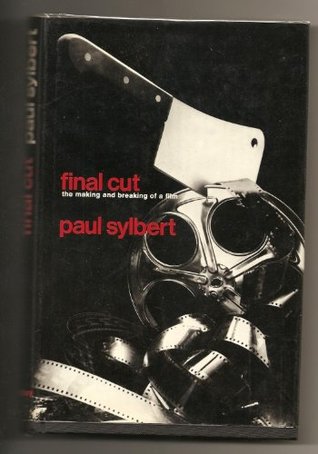
On the day I met him, back in 2004, I gravitated to him somewhat automatically, purely on a hunch. Leisurely pacing around the Annenberg Hall atrium, the heart of Temple’s media-arts hub, he was a tall, slender figure with a baseball cap and the type of khaki jacket that seemed just perfect for, say, a retired film director. I know not what possessed me to approach and spark an interaction, as it’s really unlike me. I just felt confident, I guess. "Pardon me, but are you Paul Sylbert?" I asked. Jauntily turning his wiry frame to face me, he replied, "Yep, 'tis I!" I proceeded to tell him about my video copy of The Steagle, and how, as the chief programmer of my university film series, Film Fridays, I was requesting he present the film and answer questions about it afterwards. Clearly stupefied, he laughed and informed me that the making of The Steagle had been traumatic for him…so traumatic in fact that he wrote a whole book about its undoing, at the hands of studio head/impresario Joseph E. Levine. (The book is entitled Final Cut: The Making and Breaking of a Film.)
I recounted the many things I admired about The Steagle. Seemingly touched by the sincerity with which I named its merits, he told me he would consider my proposition. “I haven't seen the thing since they butchered it. It might be interesting to see it again after all these years. I've got a masochistic streak in me.” We then sat down and discussed the rest of his career, mostly as a production designer, but also as the other half of a Hollywood power-duo formed with his twin brother, Dick Sylbert. They worked together as a team early in their career.
I quickly made a habit of sneaking into Paul's classes, even though I didn't register for them. Paul would stand before a crowd of fresh-faced kids, their eyes full of hope for a future in the movie industry, and recount his own often tumultuous (sometimes even melodramatic) behind-the-scenes stories and struggles. Paul idolized Ingmar Bergman, and would often screen Vilgot Sjöman’s 1963 documentary Ingmar Bergman Makes a Movie for his classes, as an example of what was possible in cinema. Incidentally, his favorite Bergman film was Sawdust and Tinsel (1953). As if to make a juxtaposition, his syllabus would surround this 2½-hour documentary with showings of the more misbegotten films on his CV -- works spoiled by indecisive visions, egos on parade, power trips, and executive decisions reached on casting couches.
His witty classroom rejoinders to the poor directorial choices that were on display en flagrante delicto were often quite hilarious. His unvarnished candor was the source of much of his charm. One of my favorite quips involved the ostentatious opening long take in Lili Fini Zanuck’s Rush (1991): “Why the hell put the gun in the safe and keep the wad of cash in the desk drawer? You open the whole damn movie on such a stupid mistake?”
As for working with Barbra Streisand on The Prince of Tides, he had few kind words (the strain between them on set actually made headlines): “When she wasn’t nominated for Best Director, Oscar host Billy Crystal got up there and sang, ‘Seven nominations on the shelf. Did this film direct itself?’ I couldn’t resist and, loud enough for the next row to hear, I answered, ‘Yes, it did!’”
On One Flew Over the Cuckoo’s Nest: “That set was bedlam! Pure bedlam! Three people were directing that movie: Milos [Forman], Haskell [Wexler], and Jack [Nicholson]…mostly Jack.”
On Kramer vs. Kramer: “It’s pure kitsch. The ending is bullshit. But! But! ...the movie works.” [He was armed and ready with Xeroxes of Milan Kundera's writings on the subject of kitsch when he screened this film.]
On The Wrong Man: “Hitch spoke to us about Italian neorealists in regard to The Wrong Man. He also scolded me that there’s only one way to shoot a piano: from the side.”
On Rosewood: “They made it into a spaghetti western!”
On Mikey and Nicky: “When the movie shut down in the middle of shooting, I remember walking in to a dark room at the studio and seeing John on the floor shooting up at Peter Falk. He was clearing getting odd shots to show Elaine when she came back, to possibly put in the movie. I said, ‘John, what the hell are you doing?’ He just looked up at me and said, ‘You know me, I’m crazy!’”
On the Blacklist: "People were being busted for having gone to just one Communist Party meeting. In those days, I was redder than a lobster, no joke." [He once told me the complex story of how he continued working in that era, but I forget the precise details.]
After his classes, he would lead a posse of students to the Draught Horse, a campus watering hole. He loved his young’ns, as I once quipped to a friend who remembers well those Draught Horse powwows. Sometimes, Paul and I would convene one-on-one. I would invite him into the editing room to get advice on my first feature (Sophisticated Acquaintance, a picture I didn’t finally finish until this past year). Never one to mince words, he would always tell me straight-out what I really needed to work on as a filmmaker. Needless to say, this was invaluable as a learning experience.
After a few months of imploring, and planning in spite of it all, Paul finally agreed to screen The Steagle for the film series. As we projected the film on VHS, I sat a couple rows behind him occasionally glancing to catch anything that seemed like a reaction. When the film ended, he rose and ambled to the front of the auditorium to proclaim, “It’s better than I remember it being, that’s for sure.” He proceeded to recap some of the stories accounted in his book about the production of The Steagle, then imparted some wisdom: “In life and in the arts, it’s so easy to get locked into your own ideas about the way things are, or the way things were. The thing is to, yes, have your own ideas, but also wait for them to be transcended.” I've lived by that as a credo, motto and mantra in my career as a filmmaker.
The friendship between Paul and myself only solidified after that night, so much so that he asked me to be his teaching assistant (a work-study position). This job basically entailed operating anything technical (mostly running the DVDs he wished to screen), circulating the occasional handout, and officiating the handing-in and handing-back of assignments. The bonus was that it allowed me more time to schmooze with Paul, before and after class. By the time I reached senior year, and my senior thesis film loomed on the horizon, I wanted to be bold and shoot a whole feature-length production on 16mm film. I figured, “This might be the last chance to shoot a whole film on real film, before the video revolution completely takes over.”
I had the gumption to ask Paul if he would design the film. He had effectively ended his lengthy movie career in 2001 with To End All Wars, starring Kiefer Sutherland, and felt no need to fish out his drafting kit again. At first, he demured, but then instructed me to find a student designer he would advise. While our film program was light on design students, I did find an aspiring art director who jumped at the opportunity.
Paul’s method rested in concept. For example, his contribution to Brian De Palma’s Blow Out was in the use of primary colors, mainly reds and blues, to suggest an election year. In Rush, he designed sets to emulate the swirling colors one sees in oil spetters and gas station puddles. In Conspiracy Theory, it was all about shadows (“Inside Mel Gibson’s lair, there couldn’t be any shadows. It had to be a paranoiac’s safe place.”) In Heaven Can Wait, he fought the studio over a heaven set lit completely from below (“They were thinking of the flashlight around the campfire thing. I had to actually show them that it would work by building the thing.”)
For my movie, shot in black-and-white, it was all about gray. “Use white as little as possible. All the sets should be gradations of gray and black.” When we showed him the white walls at one of the film’s key locations, an otherwise perfect set for what I wanted, he admonished, “We gotta do something about those walls. No white is allowed in this movie!” To achieve Paul's vision, coffee grounds were splattered all over the white-tiled walls.
When I told Paul that the title of the film, A Trip to Swadades, was based on the untranslatable Portuguese word “saudades” (the closest interpretation is “intense nostalgia or longing”), he got excited and took up full production designer duties. To my surprise, Paul was fluent in the Portuguese language (he could also speak Greek) and his favorite word in any language just happened to be "saudades." A happy coincidence, to say the least. He assumed the credit of production designer with the student credited beside him as art director. He took the job very seriously, more than anyone of his stature would have treated a student film, and he was proud of the final product. “As a final career credit for me, you done good, Dan,” he told me.
I followed up A Trip to Swadades with a 28-minute comedic short entitled A Collection of Chemicals. The night of the premiere, Paul slipped, fell, and gouged his head while entering the building. Blood was actually dripping down his face. Many, including myself, implored him to go to the hospital; one of the attendees offered to accompany him. He refused, declaring sternly, “I’m here to see a movie and I’m damn well going to see it.” The next day, after a visit to the hospital, he emailed to tell me everything problematic with the film. “After A Trip to Swadades, why did you decide to go silly?” He was right; A Collection of Chemicals is very much a “what I did on my summer vacation” short, made out of boredom and creative animus. I think I just wanted a change of pace after the relatively somber Swadades. But Paul was still so absolutely determined to see it the night it premiered, blood or no blood, and respected me and took me seriously enough to put it to me straight.
I continued as his teaching assistant, and made a habit of going out to dinner with him after class, with longtime friends Andrei Litvinov and Alena Kruchkova. Andrei, a cultivated foodie, always picked the best restaurants for the occasion.
My favorite Paul Sylbert story involves my addiction to ketchup. For years, Paul would watch as I drowned whatever food I ordered in ketchup, and he would invariably comment on it with a laugh. One night, Andrei took us to a Turkish restaurant, located in a dark alley off Philly's South Street. You had to knock on a nondescript door for a man wearing a turban to open up, greet you and seat you. When we entered, the place looked to us like pure old-time Ottoman Empire Istanbul, with no expense spared in decor. As we admired the ravishing decorations that gave the place its mighty dose of atmosphere, Paul turned to the man in the turban, pointed to me and exclaimed, “Get this guy some ketchup!” His longtime friend, genius comedienne Elaine May, couldn't have timed a delivery better. For the rest of the evening, he regaled us with Stories Stories Stories (yes, that's three capital S's) from his fifty-year career -- tales that made our movie-mad brains chirp with endorphins.
When I moved to New York, Paul and I stayed in touch via our regular, epic phone conversations, which ranged in subject from his Oscar votes of any given year, to politics, to classical music or opera, to old acquaintances of his I would randomly encounter (I was able to reconnect him with an old friend, producer Michael Hausman), and beyond. Every conversation began with, "Hey Dan! How you
doing, kid?" He would still challenge me in ways that the best teachers and mentors do; the conversations were very heavy, intellectual, and some of the most
fascinating I've had in my lifetime. He read many scripts and treatments for films I was prepping. Some got made, others didn't, but he always remembered each project and inquired as to the progress of each. When they were good, Paul cheered me. When they needed work, we would discuss in depth (and often at great length) what needed to change.
And he would often call me for a sympathetic ear. It discouraged him
when something or someone was forgotten in any instance. I remember when he lamented
that a given film scholar or instructor he met had never heard of Irving
Thalberg. "Time passes everyone by, sadly, but for someone to call
himself a film historian and to never have even heard of Thalberg, it boggles the mind." Needless to say, I've dealt with similar frustrations and he
knew I would empathize.
When I
visited Philadelphia on the odd weekend, we would get together and
schmooze over breakfast or lunch. At each juncture, I was grateful for such a friendship. My career in film is one that he got behind,
encouraged, and pushed very early on. He was the first person in the
film industry who convinced me that I could do it, that I could make a
career making films my way.
When I moved to San Francisco in March 2015, he spoke fondly of working there on Paul Schrader's Hardcore (1979). I sat on Hippie Hill in Golden Gate Park and listened as he recalled his adventures with Schrader and his then-apprentice (now high-powered designer) Jeannine Oppewall in the Haight Ashbury. With a whole continent now between us, it became much harder to arrange face-to-face meetings when I did manage to travel back east. This past February, when I presented him with a hardback copy of my first book, at what was our last face-to-face meeting (photo below), he acted very much like a proud father. "I always knew you'd make good, Dan," he told me. I noticed that he looked a bit more frail than I remembered, but he sure hadn't lost any of his marbles. He was, as always, sharp as a tack.
I never really got to say goodbye to Paul before he passed away at his home near Philadelphia this past weekend. Although he was 88 years old, his death nonetheless came as a great shock to me. I might very well have believed that he would live on and on, despite how I couldn't help but notice how his particularly nagging cough had gotten worse and worse over the last few months. I certainly wasn't ready to forgo this month's phone conversation, or any of the ones to follow. There was so much I wanted to discuss with him (not least of which was the recent election of Trump).
But, for this lack of a proper farewell, I am reminded that the elder at the end of Truffaut's Fahrenheit 451 likewise never uttered the word "goodbye" to the young charge seated beside him at the moment of passing. The elder's exit goes deeper than just saying a word we expect: the elder's goodbye was in what he bequeathed to that young charge -- the strength to carry with him the wisdom and knowledge that had been transmitted.
For Paul, for touching so many young lives in his years as a teacher, heaven not only can wait, it does wait. Rest in peace, my dear friend and teacher. I'll carry your flame with overwhelming pride and great warmth.
The ConFluence-Film Blog is dedicated to discussions, studies, and casual pieces concerning a variety of topics relating to film, filmmaking, media studies and cinema history. More generally, it showcases the rambling observations of a film-loving, filmmaking bloke named Daniel Kremer. Please feel entirely free to post responses to any of the posts made. Welcome!
The Life and Death of Colonel Blimp (Powell and Pressburger, 1943)
Kamouraska (Jutra, 1973)
Puzzle of a Downfall Child (Schatzberg, 1970)
Celine and Julie Go Boating (Rivette, 1974)
The Ipcress File (Furie, 1965)
Andrei Rublev (Tarkovsky, 1966)
Mon Oncle Antoine (Jutra, 1971)
Crumb (Zwigoff, 1995)
The Profound Desire of the Gods (Imamura, 1968)
Once Upon a Time in the West (Leone, 1969)
L'Atalante (Vigo, 1934)
Mr. Klein (Losey, 1976)
The Cloud-Capped Star (Ghatak, 1960)
A Star is Born (Cukor, 1954)
Hit! (Furie, 1973)
Sheila Levine is Dead and Living in New York (Furie, 1975)
Dear Mr. Wonderful (Lilienthal, 1982)
Rosemary's Baby (Polanski, 1968)
Hester Street (Silver, 1975)
The Unbearable Lightness of Being (Kaufman, 1988)
Nanook Taxi (Folger, 1977)
Edvard Munch (Watkins, 1973)
Rocco and His Brothers (Visconti, 1960)
Montreal Main (Vitale, 1974)
Odd Man Out (Reed, 1947)
The Structure of Crystals (Zanussi, 1969)
A Safe Place (Jaglom, 1971)
The Ernie Game (Owen, 1967)
Saint Jack (Bogdanovich, 1979)
Eros Plus Massacre (Yoshida, 1969)
Punishment Park (Watkins, 1971)
The Apu Trilogy (Ray, 1955-59)
The Leopard (Visconti, 1963)
Berlin Alexanderplatz (Fassbinder, 1980)
Killer of Sheep (Burnett, 1977)
2001: A Space Odyssey (Kubrick, 1968)
Dr. Strangelove, or How I Learned to Stop Worrying and Love the Bomb (Kubrick, 1964)
Hannah and Her Sisters (Allen, 1986)
Tracks (Jaglom, 1976)
A tout prendre (Jutra, 1963)
Eva (Losey, 1962)
Children of Paradise (Carne, 1945)
The Loneliness of the Long-Distance Runner (Richardson, 1962)
Paris Nous Appartient (Rivette, 1960)
The Charge of the Light Brigade (Richardson, 1968)
Barry Lyndon (Kubrick, 1975)
The L-Shaped Room (Forbes, 1962)
Mademoiselle (Richardson, 1966)
Cul-de-Sac (Polanski, 1966)
Little Fauss and Big Halsy (Furie, 1970)
Dog Day Afternoon (Lumet, 1975)
Daddy Longlegs (Go Get Some Rosemary) (The Safdies, 2010)
La Mort en Direct (Tavernier, 1980)
The Rain People (Coppola, 1969)
Make Way for Tomorrow (McCarey, 1937)
Chinatown (Polanski, 1974)
One-Eyed Jacks (Brando, 1961)
Young Mr. Lincoln (Ford, 1939)
Lawrence of Arabia (Lean, 1962)
The Apprenticeship of Duddy Kravitz (Kotcheff, 1974)
12 Angry Men (Lumet, 1957)
Martha Marcy May Marlene (Durkin, 2011)
The 400 Blows (Truffaut, 1959)
Electra Glide in Blue (Guercio, 1973)
Ride the High Country (Peckinpah, 1962)
The Sugarland Express (Spielberg, 1974)
Chronicle of the Years of Fire (Lakhdar-Hamina, 1975)
Apocalypse Now (Coppola, 1979)
Kes (Loach, 1969)
The Grapes of Wrath (Ford, 1940)
Medicine Ball Caravan (Reichenbach, 1971)
Route One U.S.A. (Kramer, 1989)
Being There (Ashby, 1979)
City Lights (Chaplin, 1936)
The Night They Raided Minsky's (Friedkin, 1968)
Lola Montes (Ophuls, 1955)
Bunny Lake is Missing (Preminger, 1965)
My Dinner With Andre (Malle, 1981)
American Movie (Smith, 1999)
Detour (Ulmer, 1945)
Strangers on a Train (Hitchcock, 1951)
A Canterbury Tale (Powell & Pressburger, 1944)
City for Conquest (Litvak, 1940)
A Double Life (Cukor, 1947)
Crimes and Misdemeanors (Allen, 1989)
O Lucky Man! (Anderson, 1973)
The Long Goodbye (Altman, 1973)
Rope (Hitchcock, 1948)
Minnie and Moskowitz (Cassavetes, 1971)
The Human Condition (Kobayashi, 1960)
Last Tango in Paris (Bertolucci, 1972)
In a Lonely Place (Ray, 1949)
Circle of Deceit (Schlondorff, 1981)
The Passenger (Antonioni, 1975)
A Woman Under the Influence (Cassavetes, 1974)
America, America (Kazan, 1963)
Johanna d'Arc of Mongolia (Ottinger, 1989)
Grand Illusion (Renoir, 1937)
McCabe and Mrs. Miller (Altman, 1971)
Mikey and Nicky (May, 1976)
They Shoot Horses Don't They? (Pollack, 1969)
The Night of the Following Day (Cornfield, 1968)
Kings and Desperate Men (Kanner, 1981)
A Face in the Crowd (Kazan, 1957)
Malpertuis (Kumel, 1972)
The Plot Against Harry (Roemer, 1969)
Ninotchka (Lubitsch, 1939)
The Last Detail (Ashby, 1973)
Up Down Fragile (Rivette, 1995)
White Heat (Walsh, 1949)
Greed (Von Stroheim, 1925)
Isadora (Reisz, 1968)
Paris, Texas (Wenders, 1984)
Sometimes a Great Notion (Newman, 1971)
Breaking the Waves (Von Trier, 1996)
Where the Sidewalk Ends (Preminger, 1950)
Amarcord (Fellini, 1974)
Citizen Kane (Welles, 1941)
Tokyo Story (Ozu, 1953)
Taking Off (Forman, 1971)
Midnight Cowboy (Schlesinger, 1969)
Wild Strawberries (Bergman, 1957)
Signal 7 (Nilsson, 1983)
Meet John Doe (Capra, 1940)
Heaven's Gate (Cimino, 1980)
Schindler's List (Spielberg, 1993)
Chimes at Midnight (Welles, 1966)
Soldier of Orange (Verhoeven, 1978)
Camera Buff (Kieslowski, 1979)
Some Came Running (Minnelli, 1958)
La Dolce Vita (Fellini, 1961)
Lightning Over Water (Wenders, 1980)
Regular Lovers (Garrell, 2005)
Monsieur Verdoux (Chaplin, 1947)
Mouchette (Bresson, 1967)
Chilly Scenes of Winter (Silver, 1979)
The Apartment (Wilder, 1960)
In Cold Blood (Brooks, 1967)
A Time to Love and a Time to Die (Sirk, 1958)
Something for Everyone (Prince, 1970)
ConFluence's Favorite Directors
Jacques Rivette
Sidney J. Furie
Claude Jutra
Andrei Tarkovsky
Jean Vigo
Michael Powell/Emeric Pressburger
Nicolas Roeg
Joseph Losey
Robert Altman
Jean Renoir
John Cassavetes
Luchino Visconti
Tony Richardson
Ritwik Ghatak
Max Ophuls
John Huston
Ingmar Bergman
George Cukor
Joan Micklin Silver
Orson Welles
Alan J. Pakula
Robert Bresson
Frank Perry
Peter Watkins
Shohei Imamura
Charles Chaplin
Vincente Minnelli
Rainer Werner Fassbinder
Satyajit Ray
Jules Dassin
Henry Jaglom
ConFluence's Favorite Actors
Gena Rowlands
Glenda Jackson
Jeanne Moreau
Warren Oates
Max Von Sydow
Viveca Lindfors
Peter Sellers
John Garfield
James Cagney
Catherine Deneuve
Marlon Brando
Edward G. Robinson
Sandrine Bonnaire
Karen Black
Philippe Noiret
Michael Caine
Daniel Day-Lewis
Robert Mitchum
Lionel Stander
Gerard Depardieu
Lena Olin
Michel Piccoli
Jill Clayburgh
Jason Robards
Dirk Bogarde
Rosalind Russell
Allen Garfield
Anthony Quinn
Tuesday Weld
Tom Wilkinson
Ellen Burstyn
Jason Robards
Simone Signoret
Anton Walbrook
Claudia Cardinale
David Proval
David Opatoshu
Theodore Bikel
Elliott Gould
Dominique Sanda
About the Writer
Daniel Kremer grew up in Pittsburgh, Pennsylvania and lives in San Francisco, California. While residing in Philadelphia and New York City, he wrote and directed many films of both short and feature-length. The black-and-white super-16mm feature-length narrative A Trip to Swadades and the autobiographical documentary short subject Yarns To Be Spun on the Way to the Happy Home have been screened in international film festivals and across the country, and both have won many awards (including a Best Feature Film prize, the Motion Picture Award and three Best Documentary prizes, respectively). In 2011, he directed his second feature, the acclaimed The Idiotmaker's Gravity Tour, filmed predominantly in India. In 2013, he started shooting feature films in the San Francisco Bay Area. He is currently in post-production on Ezer Kenegdo and Raise Your Kids on Seltzer, both due out in 2015.